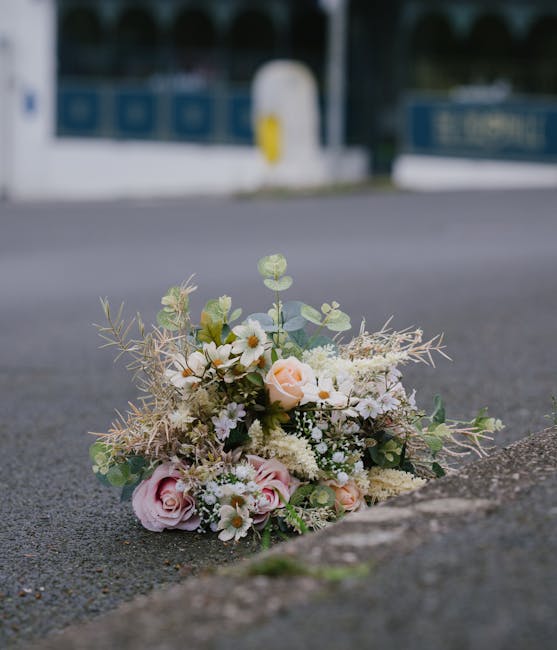
Common problems with Hornchurch wedding flowers and fixes
Posted on 13/06/2026
Wedding flowers should feel effortless on the day. In reality, a few small things can go sideways: blooms arrive too early, bouquets wilt in warm rooms, the colour palette looks different under venue lighting, or a last-minute substitution throws everything off. If you are planning a wedding in Hornchurch, those hiccups can feel extra stressful because there is usually a tight schedule, a venue setup window that disappears quickly, and no one wants to be faffing around with stems when the registrar or photographer is already asking for the couple.
This guide breaks down the most common problems with Hornchurch wedding flowers and fixes in plain English. You will see what usually goes wrong, why it happens, and what to do about it before the day, on the day, and if something still needs rescuing at the eleventh hour. The aim is simple: fewer surprises, better-looking flowers, and a calmer wedding morning. Sounds good, right?
Table of Contents
- Why Common problems with Hornchurch wedding flowers and fixes Matters
- How Common problems with Hornchurch wedding flowers and fixes Works
- Key Benefits and Practical Advantages
- Who This Is For and When It Makes Sense
- Step-by-Step Guidance
- Expert Tips for Better Results
- Common Mistakes to Avoid
- Tools, Resources and Recommendations
- Law, Compliance, Standards, or Best Practice
- Options, Methods, or Comparison Table
- Case Study or Real-World Example
- Practical Checklist
- Conclusion
- Frequently Asked Questions
Why Common problems with Hornchurch wedding flowers and fixes Matters
Wedding flowers do more than look pretty in photos. They set the tone for the whole day, guide the colour palette, and make the venue feel finished. In Hornchurch, where couples might be splitting time between a ceremony space, a reception venue, and a tight travel schedule, flower problems can snowball quickly. A bouquet that droops before the ceremony is annoying. A centrepiece that arrives without enough water? That can be a proper headache.
This matters because flowers are often one of the most visible parts of the wedding and one of the easiest details to underestimate. People think, "They're just flowers, how hard can it be?" Then the weather changes, the supplier has to source a different bloom, or the venue asks for an earlier delivery time. To be fair, floristry is part art, part logistics, and part damage control.
Fixing the common issues early protects three things: the look of the day, your budget, and your nerves. That last one is no small thing. If you have ever seen a bride quietly panic because the roses are opening too fast, you will know what I mean. One small issue can suddenly feel enormous.
There is also the local side of it. Hornchurch weddings can involve town-centre access, parking limits, busy weekend traffic, and venue timings that do not leave much wiggle room. Planning with those realities in mind helps you avoid last-minute scrambles and keeps flower delivery and setup on track.
How Common problems with Hornchurch wedding flowers and fixes Works
Most wedding flower issues fall into a few predictable buckets: timing, temperature, sourcing, design mismatch, and setup logistics. Once you understand how those problems happen, the fix becomes much clearer. You do not need to be a florist to spot the risk. You just need a decent plan and a couple of sensible checks.
Here is the basic flow of a well-managed flower plan:
- You choose the style, season, and budget.
- The florist confirms what is realistic for the date and venue.
- Substitutions are discussed in advance, not on the morning of the wedding.
- Delivery, storage, and installation are mapped out clearly.
- The team checks hydration, condition, and final placement before guests arrive.
Where things go wrong is usually somewhere in that chain. For example, a couple may fall in love with peonies for a summer wedding, but the wedding date ends up falling into a week when supply is patchy. Or they may want a floral arch outdoors, then discover the venue is windier than expected. Slightly awkward, but fixable.
The fix is rarely "buy more flowers" and more often "make the plan more robust." That might mean using a mix of focal blooms and supporting flowers, selecting hardy varieties, keeping stems hydrated in transit, or switching from a heavy installation to a simpler arrangement that travels better. Sometimes the smartest solution is not the fanciest one.
Typical problem patterns you should watch for
- Flowers arriving too early and opening before the ceremony.
- Weather stress, especially heat, cold, or wind.
- Late substitutions because a bloom is unavailable or poor quality.
- Mismatch between flowers and venue, such as scale, colour, or style.
- Weak logistics, including parking, access, and setup windows.
Key Benefits and Practical Advantages
Sorting out flower problems before they happen gives you more than pretty arrangements. It creates confidence. And on a wedding day, confidence is valuable. You stop second-guessing and start enjoying the day properly.
Some of the biggest practical advantages include:
- Better freshness because flowers are handled and stored correctly.
- Less waste because the design suits the season and the venue.
- Fewer surprises because substitutions are agreed early.
- More consistent photos because bouquets and arrangements hold their shape.
- Reduced stress for the couple, the venue, and the supplier.
There is also a creative upside. When the logistics are handled well, your florist can focus on the design details that matter: texture, balance, scale, and how the arrangements feel in the room. That is when flowers stop being "just decoration" and start doing proper work. They frame the aisle. They soften the tables. They make the whole day feel intentional.
Expert summary: the best wedding flower outcomes usually come from realistic expectations, seasonal choices, and a clear delivery plan. Pretty is important, but practical is what keeps pretty alive long enough to matter.
Who This Is For and When It Makes Sense
This guide is for couples planning a wedding in Hornchurch, of course, but it is also useful for anyone helping with the day: family members, wedding planners, venue coordinators, and even the person who has somehow become the unofficial logistics manager. You know the one.
It makes sense if you are:
- booking a florist for a spring, summer, autumn, or winter wedding;
- planning an indoor, outdoor, or mixed-space celebration;
- worried about fresh flower durability in warm rooms or during transport;
- trying to stay within budget without losing the look you want;
- dealing with venue timing restrictions or awkward access;
- considering a mix of fresh flowers, dried elements, or artificial accents.
This is also useful if you are at the "we have ideas, but not a full plan yet" stage. Truth be told, that is where many couples start. They know they want soft romance, or bold colour, or something modern and minimal. They just do not know how to turn that into arrangements that survive the real world of wedding morning chaos.
If you are already comparing suppliers, you may find it helpful to look at other service information too, such as local wedding support and event floristry options on wedding flower services when you are narrowing down what style and level of support you actually need.
Step-by-Step Guidance
If you want fewer problems, follow the process in the same order the flowers will experience it. That sounds obvious, but it is easy to jump straight to colour palettes and forget the journey the flowers will take from cooler to car to venue to table.
1. Start with the venue conditions
Ask about ceremony room temperature, reception layout, timing for access, and where arrangements can be stored before setup. A bright room near a window might look lovely in person, but direct sun can be rough on delicate blooms. Outdoor spaces need wind planning. Simple as that.
2. Pick flowers that suit the season
Seasonal flowers are usually easier to source, more reliable in quality, and less likely to turn up stressed. If you want something outside its natural season, be prepared to adapt the design if supply or condition changes. That is not a flaw in the plan. It is just how flowers behave.
3. Decide what matters most
Is your priority a certain colour, a specific flower type, or overall impact? If you try to force every detail, you can end up with a fragile plan. A stronger approach is to choose one or two must-haves, then let the florist build around them.
4. Build in alternatives
Ask what the substitute flowers will be if a bloom is unavailable or arrives in poor condition. Good floristry is not about pretending every stem will be perfect. It is about knowing the backup. A decent florist will usually be able to tell you which flowers can be swapped without upsetting the whole design.
5. Confirm delivery and set-up details
Check access, parking, loading points, lift availability if relevant, and who will receive the flowers. If nobody is there when the delivery arrives, things can get messy very quickly. And flowers do not enjoy waiting around in the boot of a van, let's be honest.
6. Plan for hydration and storage
Bouquets, buttonholes, and centrepieces should be kept cool and hydrated until they are needed. If the wedding runs long before the ceremony, ask the florist how each item should be stored. That one conversation can save a lot of drooping stems.
7. Check the final look in natural light if possible
Colours can look surprisingly different under warm indoor lighting. Cream may read as ivory. Blush may appear almost peach. Deep green can look richer or flatter depending on the room. If the venue has strong lighting, ask for sample photos or a mock-up where practical.
Expert Tips for Better Results
Experienced florists tend to think in systems, not single stems. That is the bit couples sometimes miss. A bouquet is not just a bouquet; it is a combination of flower type, stem strength, water access, handling time, and how long it must look perfect without help. A lot is going on behind the scenes.
Choose hardy flowers for the most exposed moments
If your bouquet will be carried outdoors for photos, or arrangements will sit near open doors, use sturdier blooms and foliage. Roses, spray roses, alstroemeria, lisianthus, chrysanthemums, and some greenery varieties often handle busy days more comfortably than ultra-delicate blooms.
Use focal flowers sparingly when supply is uncertain
Focal flowers make the design memorable, but if they are tricky to source, keep them as accents rather than the entire structure. That way, if one variety is unavailable, the overall look still holds together.
Ask about the "point of failure"
Every arrangement has a weak spot. For a tall centrepiece, it may be balance. For a bouquet, it may be stem hydration. For an arch, it may be wind resistance. A good supplier will know the weak point and plan around it. If they do not? Mild red flag.
Don't ignore scale
A tiny arrangement in a large venue can disappear. A giant piece in a small room can feel overwhelming. Matching scale to room size is one of the easiest ways to make flowers look more expensive, even when the budget is sensible.
Think in zones, not just items
Instead of treating each arrangement separately, consider where guests will actually notice them: entrance, aisle, ceremony backdrop, top table, guest tables, and photo spots. That makes the budget work harder. Not every area needs to shout.
Leave a little room for spontaneity
To be fair, some of the nicest wedding flowers happen when the florist has a bit of creative freedom within agreed boundaries. If you micromanage every stem, you can end up with something neat but oddly flat. A little trust goes a long way.
Common Mistakes to Avoid
Most flower disasters are not dramatic. They are ordinary mistakes repeated under pressure. The good news is that ordinary mistakes are easy to prevent once you know what to watch for.
- Booking too late: the best dates and stronger flower choices go quickly, especially in peak wedding season.
- Ignoring the weather: a bouquet that suits April indoors may not love a humid July afternoon outside.
- Choosing too many different flower types: this can raise cost and make the design harder to keep consistent.
- Not asking about substitutions: if a key bloom is unavailable, you should know the backup plan before the week of the wedding.
- Forgetting venue rules: some venues limit candles, adhesives, hanging structures, or late access.
- Assuming photos tell the full story: Pinterest is useful, but it does not show local supply conditions or your specific room light.
- Underestimating handling time: bouquets need care, and centrepieces need to be moved safely, not rushed like parcels in a hurry.
One little mistake can trigger another. A delayed delivery can shorten setup time, which can mean rushed placement, which can mean damaged stems. That is why planning the chain matters more than any one arrangement.
Tools, Resources and Recommendations
You do not need special equipment to plan flowers well, but a few practical tools make the process much smoother. Think of them as quiet helpers rather than glamorous wedding items.
- Venue floor plans or a simple sketch: useful for showing where arrangements will go.
- Reference photos: ideal for style, shape, and colour direction.
- Written notes on must-haves: especially if family members are helping with decisions.
- Colour swatches or fabric samples: handy for matching flowers with dresses, table linens, or stationery.
- Delivery contact sheet: name, mobile number, access details, and who signs for the flowers.
- Backup list: alternative flowers, alternative containers, and alternative placement ideas.
If you are comparing broader event support or want to understand how floral work fits into the wider wedding setup, some couples also look at event flower arrangements as a useful way to think about scale, flow, and room styling. It is a helpful lens, especially if your wedding feels more like a full-day celebration than a single ceremony.
Practical recommendation: keep all floral decisions in one place. A single document with the style brief, delivery times, floral priorities, and contact details can save a lot of back-and-forth in the final week. That final week gets busy very fast.
Law, Compliance, Standards, or Best Practice
For most wedding flowers, there is no complex legal compliance issue for couples to manage directly. Still, there are sensible UK best practices worth keeping in mind. Florists should handle flowers safely, transport them responsibly, and be clear about delivery terms, cancellation terms, and what happens if substitutions are needed. That is just good business practice.
From a venue perspective, there may be rules around access times, fire safety, hanging installations, adhesive use, and what can be attached to walls or fixtures. These are not optional details, even if they feel like admin at the time. Best to check them early.
It is also wise to choose arrangements that are stable and not likely to shed heavily, spill water, or create trip hazards. Particularly for aisle pieces, pedestal arrangements, and table installations, safety matters as much as appearance. Nobody wants a toppling vase just as the photographer says, "Perfect, hold that."
If your wedding includes allergy concerns, ask about strongly scented flowers and pollen-heavy varieties. This is not about being difficult; it is about making the day comfortable for guests and the wedding party. Same with pets if any are present at the venue or accommodation. Small practical points, but they count.
Options, Methods, or Comparison Table
When dealing with common flower problems, there are usually a few ways to respond. The best option depends on budget, season, venue, and how much risk you are comfortable with.
| Problem | Common fix | Best for | Watch out for |
|---|---|---|---|
| Flowers wilting in heat | Choose hardy blooms, hydrate well, keep them cool | Summer weddings, outdoor ceremonies | Direct sun and long waiting times |
| Unavailable flower variety | Use a pre-agreed substitute | Seasonal or imported flowers | Last-minute indecision |
| Colour mismatch | Use fabric swatches and daylight checks | Style-led weddings | Warm indoor lighting distorting tones |
| Budget pressure | Reduce flower types and focus on impact areas | Cost-conscious planning | Spreading the budget too thin |
| Venue access issues | Confirm timing, parking, and loading details early | Busy Hornchurch venues | Assuming access will be easy |
There is no single perfect method. A simple, seasonal design can often outperform a complicated one, especially if the venue is busy or the weather is unpredictable. Fancy is nice. Reliable is nicer.
Case Study or Real-World Example
Here is a realistic example from the kind of planning challenge couples run into. A couple wanted soft blush and ivory flowers for a late-spring wedding in Hornchurch. The original idea was very rose-heavy, with a few premium stems for the bouquet and table arrangements. Lovely on paper. Slight problem: the ceremony room was bright, the reception space had an early setup window, and the forecast suggested a warm afternoon.
Rather than forcing the original plan unchanged, the florist adjusted it. The bouquet kept the romantic feel, but the supporting flowers were switched to sturdier varieties. The centrepieces used more greenery and fewer delicate blooms, which helped the arrangements hold shape longer. The ceremony flowers were delivered later in the day, reducing the time they spent waiting in warmth. Result? The day still looked elegant, but there was less stress and fewer issues with drooping heads or tired petals.
What stands out in examples like this is that the fix was not dramatic. Nobody reinvented wedding floristry. They just made a few practical adjustments at the right time. That is usually what works best. The boring answer, annoyingly, is often the correct one.
Practical Checklist
Use this as a quick pre-wedding sanity check. It is especially useful in the final two weeks when everything feels like it is happening at once.
- Have you confirmed the ceremony and reception venue timings?
- Do you know where the flowers will be delivered and who will receive them?
- Have you agreed substitute flowers for key items?
- Are your chosen blooms suitable for the season?
- Have you checked whether the venue is warm, bright, windy, or cramped in any key areas?
- Do you know which arrangements need water and which can wait?
- Have you decided where the budget should go first: bouquet, ceremony flowers, tables, or photo areas?
- Have you shared colour references, fabric samples, or style notes?
- Do you know if there are any venue restrictions on installations or adhesives?
- Have you set aside a small backup margin for last-minute adjustments?
Quick reminder: if a flower choice feels risky, ask what it looks like in a backup version. That one question can save a lot of stress later.
Conclusion
Common problems with Hornchurch wedding flowers and fixes usually come down to a few practical realities: timing, temperature, venue access, seasonal availability, and clear communication. Get those parts right and the rest tends to follow more smoothly. You do not need an overcomplicated plan. You need a realistic one, a florist who understands the venue, and a little flexibility where flowers naturally demand it.
The best wedding flower plans are the ones that feel calm on the day because the hard thinking happened earlier. That is the whole game, really. And when it works, you notice it in the room straight away: the scent, the colour, the way everything feels quietly finished without shouting for attention. Nice, isn't it?
If you are still comparing ideas or trying to work out what is realistic for your date, take the next step with a proper quote and a clear conversation about seasonal options, delivery, and substitutes.
Get a free quote today and see how much you can save.
Frequently Asked Questions
What are the most common problems with wedding flowers in Hornchurch?
The most common issues are wilting in warm weather, late deliveries, colour mismatches, flower substitutions, and venue access problems. Most of these can be prevented with a clear plan and realistic flower choices.
How do I stop wedding flowers from wilting on the day?
Keep them hydrated, avoid unnecessary time in heat, and ask for sturdier blooms if the weather is likely to be warm. Delivery timing matters too. Flowers should spend as little time as possible waiting around.
What if my florist cannot get the exact flowers I wanted?
Ask for substitute options in advance. A good florist should be able to suggest alternatives that keep the same style, colour mood, or texture without wrecking the overall design.
Are seasonal flowers really better for weddings?
Usually, yes. Seasonal flowers are often fresher, more reliable, and easier to source. They also tend to be less stressful from a planning point of view, which is worth a lot in itself.
How far in advance should I book wedding flowers?
As early as you reasonably can, especially for busy spring and summer dates. Earlier booking gives you more choice, better planning time, and a calmer conversation about what is possible.
Can I still have a rose-heavy look if roses are risky or out of season?
Yes, often you can recreate the feel using supporting flowers, similar tones, and clever texture choices. It may not be an exact copy, but it can still look romantic and cohesive.
What should I tell my florist about the venue?
Share the venue name, access details, setup times, room temperature concerns, parking limits, and any restrictions on installations. The more practical detail they have, the fewer surprises you will get.
Is it better to spend more on the bouquet or on reception flowers?
That depends on where you want the visual impact. Some couples prioritise the bouquet and ceremony backdrop because those show up most in photos. Others want the tables and entrance to feel fuller. There is no single right answer.
How can I make wedding flowers look good in photos?
Focus on scale, colour harmony, and freshness. Avoid overcrowding the arrangement with too many unrelated flower types, and check how the colours look in the venue lighting if possible.
Do I need to worry about allergies or scent?
If guests or the wedding party have sensitivities, yes, it is worth asking. Some flowers are more strongly scented than others, and some have heavier pollen. A florist can usually suggest safer alternatives.
What is the biggest mistake couples make with wedding flowers?
Probably assuming the first version of the plan will survive unchanged. Weddings move fast, weather changes, and flower supply can shift. The smartest plans include a backup, not just a dream.
Can a simple floral plan still look elegant?
Absolutely. In fact, simple plans often look sharper because they are cohesive and well executed. A few strong arrangements placed well can be more effective than lots of small, diluted ones.